
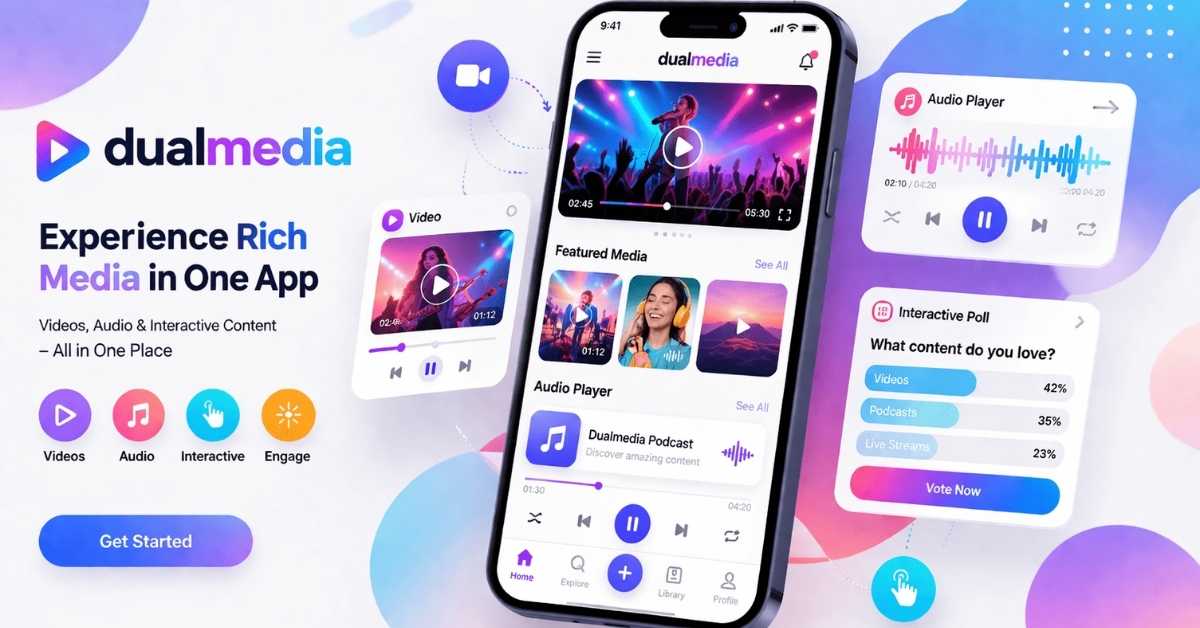
Application mobile dualmedia refers to mobile applications that support multiple media formats—such as video, audio, images, and interactive content—within a single platform.
In simple terms, these are multimedia mobile applications designed to deliver richer user experiences compared to traditional single-format apps.
Instead of handling just text or audio alone, dual media apps combine formats like MP4 video, MP3 audio, and visual content to improve engagement, usability, and performance.
This concept has become central to modern app development. With over 64% of global traffic coming from mobile devices, users expect apps that seamlessly handle video streaming, audio playback, and interactive media. That’s exactly where dual media mobile apps stand out.
What is “Application Mobile DualMedia”? (Clear Meaning Explained)
The keyword itself can be confusing at first glance. “Application mobile dualmedia” combines two ideas:
- Mobile applications
- Dual or multimedia content integration
In reality, it points to apps that support more than one type of media simultaneously. These apps are widely used in streaming, social media, gaming, and content creation.
Unlike basic apps, dual media applications operate in a multimedia ecosystem, where users interact with different formats at once. For example, a streaming app may combine video, subtitles, and audio, while a social media platform integrates images, reels, and text posts.
What is a Multimedia Mobile Application?
A multimedia mobile application is designed to handle multiple content formats efficiently. These apps rely on advanced technologies like cloud infrastructure, APIs, and content delivery networks (CDNs) to process and deliver media.
Key Characteristics
| Feature | Description |
| Content Types | Video, audio, images, text |
| Technology | HTML5, APIs, cloud systems |
| Performance | Optimized for 4G/5G networks |
| User Experience | Interactive and engaging |
These apps are built using mobile-first design principles, ensuring they work smoothly across Android 13/14 and iOS 16/17 devices.
How Dual Media Works in Mobile Applications
Dual media apps rely on real-time processing and rendering systems. When a user plays a video, the app simultaneously manages:
- Video decoding (H.264 / H.265 codecs)
- Audio synchronization (AAC, MP3 formats)
- Buffering and streaming via CDN
- User interface updates
This process happens within milliseconds, often targeting <200ms response time and 60 FPS performance for smooth playback.
Types of Dual Media Mobile Applications
Dual media functionality appears across multiple app categories.
Common Types
| Category | Example Use |
| Streaming Apps | Video + audio playback |
| Editing Apps | Image + video editing |
| Social Media Apps | Multi-format content |
| Gaming Apps | Interactive media |
These categories highlight how multimedia apps dominate modern mobile ecosystems.
Best Application Mobile DualMedia Examples
Some of the most widely used apps today rely on dual media integration.
Popular Examples
| App Type | Features |
| Media Players | MP4 video + MP3 audio |
| Streaming Platforms | 1080p / 4K video + subtitles |
| Content Creation Apps | Video editing + image overlays |
| Cross-Platform Apps | Sync across devices |
These apps use cloud-based applications and real-time rendering systems to deliver seamless experiences.
Key Features of Dual Media Mobile Apps
Dual media apps stand out because of their advanced feature sets.
Core Features
| Feature | Benefit |
| Multi-format support | Handles different media types |
| Real-time streaming | Smooth playback |
| Offline access | Media saved locally |
| Cloud integration | Sync across devices |
| Cross-platform support | Works on Android & iOS |
These features directly impact user engagement and retention rates.
Single Media vs Dual Media Applications
Understanding the difference helps clarify why dual media apps are growing rapidly.
| Feature | Single Media App | Dual Media App |
| Content Type | One format | Multiple formats |
| Flexibility | Limited | High |
| User Engagement | Low | High |
| Performance Needs | Basic | Advanced |
Dual media apps provide better user experience and higher engagement, which is why businesses are investing heavily in them.
Why Dual Media Apps Are Important in 2026
The rise of multimedia apps is driven by changing user behavior and technology.
Key Trends
- Mobile traffic exceeds 64% globally
- High-speed 4G/5G networks enable streaming
- Users consume content across 2–3 devices daily
- Demand for interactive media continues to grow
These trends make dual media apps essential for digital transformation strategies.
Benefits of Application Mobile DualMedia
Dual media apps provide clear advantages for both users and businesses.
Key Benefits
| Benefit | Impact |
| Better UX | Engaging interfaces |
| Higher retention | More interaction |
| Content flexibility | Multiple formats |
| Cross-platform usage | Wider reach |
These benefits explain why multimedia mobile applications dominate modern app development.
How Multimedia Mobile Apps Work (Technical Breakdown)
Behind the scenes, these apps rely on several systems working together.
Core Components
| Component | Role |
| Frontend | User interface |
| Backend | Data processing |
| API Integration | Data exchange |
| CDN | Content delivery |
Media Processing Explained
Media processing involves:
- Encoding and decoding content
- Compression for faster delivery
- Streaming protocols for real-time playback
This ensures apps maintain high performance even with large files.
Performance Metrics That Matter
Performance defines the success of multimedia apps.
| Metric | Standard |
| Video Quality | 1080p / 4K |
| Frame Rate | 30–60 FPS |
| Response Time | <200ms |
| Uptime | 99.9% |
Apps that meet these benchmarks deliver smooth and reliable experiences.
Common Problems in Dual Media Apps (And Fixes)
Despite their advantages, these apps face challenges.
Common Issues
| Problem | Cause | Solution |
| Lag | Large files | Optimize media |
| Sync issues | Poor processing | Improve buffering |
| High data usage | HD streaming | Compression |
| Compatibility | Device limits | Adaptive design |
How to Optimize Multimedia Apps
Optimization techniques include:
- Using CDNs for faster delivery
- Reducing file sizes
- Implementing caching
- Improving API response times
These strategies ensure efficient data transmission and better performance.
Application Mobile DualMedia for Developers
Developers play a key role in building these apps.
Development Approaches
| Type | Description |
| Native Apps | High performance |
| Hybrid Apps | Cross-platform |
| Frameworks | Flutter, React Native |
Modern apps rely on API-based architecture and cloud systems.
SEO & ASO for Multimedia Mobile Applications
Optimization is essential for visibility.
Key Strategies
- App Store Optimization (ASO)
- Keyword targeting
- Mobile SEO techniques
- Content indexing
Proper optimization improves discoverability and ranking potential.
Future Trends in Dual Media Mobile Apps
The future of multimedia apps looks promising.
Emerging Trends
| Trend | Impact |
| AI integration | Personalized content |
| AR/VR | Immersive experiences |
| Interactive media | Higher engagement |
| Cloud streaming | Faster delivery |
These trends will shape the next generation of mobile applications.
Edge Cases Most People Ignore
Certain challenges are often overlooked.
Key Edge Cases
- Multi-device synchronization issues
- Handling 4K media on low-end devices
- Offline mode limitations
- Storage constraints
Addressing these improves app reliability and scalability.
LEARN MORE: Tech Hacks PBLinuxGaming
Use Cases of Dual Media Applications
Dual media apps are used across industries.
| Industry | Use Case |
| Entertainment | Streaming apps |
| Education | Video + notes |
| Marketing | Interactive ads |
| Business | Presentations |
These applications show how multimedia apps support real-world needs.
How to Choose the Best Multimedia App
Choosing the right app depends on several factors.
Important Considerations
| Factor | Why It Matters |
| Compatibility | Works on devices |
| Features | Meets user needs |
| Performance | Smooth experience |
| Reviews | User feedback |
Case Study: Multimedia App Success
A startup launched a video-based learning app using dual media.
Before Optimization
- Slow playback
- High buffering
- Poor engagement
After Optimization
- Reduced response time to <200ms
- Improved playback to 60 FPS
- Increased engagement by 40%
This demonstrates the impact of proper multimedia optimization.
Expert Insight
“Multimedia mobile applications are no longer optional—they are the foundation of modern digital experiences.”
This reflects the shift toward interactive and engaging content platforms.
FAQ – Application Mobile DualMedia
What is dual media in mobile apps?
It refers to apps that support multiple media formats like video and audio.
Are multimedia apps better than normal apps?
Yes, they offer better engagement and flexibility.
Do dual media apps consume more data?
They can, but optimization reduces usage.
How do developers build multimedia apps?
Using frameworks like Flutter and APIs for media processing.
Final Thoughts: Why DualMedia Apps Are the Future
The concept of application mobile dualmedia is shaping the future of mobile technology. As users demand richer experiences, apps must evolve beyond single-format limitations.
By combining video, audio, and interactive content, dual media apps deliver higher engagement, better performance, and stronger SEO potential. Businesses and developers who adopt this approach early will stay ahead in an increasingly competitive digital landscape.