
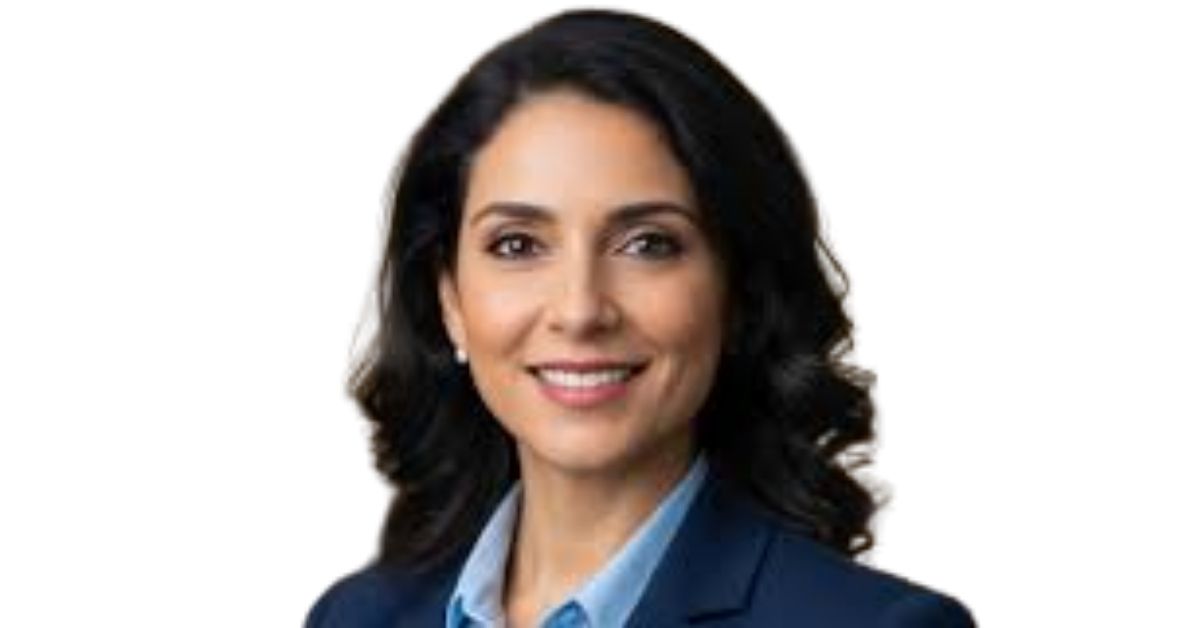
Some people choose a career. Others choose a calling. And then there are rare individuals like Nadeshda Ponce, who somehow manage to build both — and then keep going.
Nadeshda Ponce is a Venezuelan-American entrepreneur, wellness advocate, data analyst, artist, and elder care founder based in Houston, Texas. She is best known for three major pillars of work: her corporate role as a SAS Analyst III at Computershare, her founding of Loving Arms Assisted Living Facility, and her creation of Sourcepoint — a holistic wellness initiative that blends mindfulness, energy healing, and creative expression.
In short, Nadeshda Ponce is a multidimensional leader who has built a life around a single, clear idea: that people deserve to be cared for completely — mentally, physically, and spiritually.
But how did she get here? And what exactly is Sourcepoint? Let’s dig in.
Nadeshda Ponce Bio
| Attribute | Details |
|---|---|
| Full Name | Nadeshda Ponce |
| Known As | Nadeshda Ponce |
| Date of Birth | Not Publicly Available |
| Age | Not Publicly Available |
| Birthplace | United States |
| Nationality | American |
| Ethnicity | Mixed (commonly reported) |
| Profession | Social Media Personality, Model |
| Famous For | Online presence, lifestyle and modeling content |
| Height | Not Publicly Available |
| Weight | Not Publicly Available |
| Relationship Status | Private |
| Net Worth (est.) | Under Review / Not Publicly Disclosed |
| Social Media | Active on Instagram and other platforms |
| Active Years | 2020s – Present |
Nadeshda Ponce Biography: Roots in Venezuela
Every strong story has strong roots. For Nadeshda Ponce, those roots begin in Venezuela, where she was born into a family that deeply valued culture, creativity, and community. Growing up, she was surrounded by music, dance, folklore, and storytelling — not as hobbies, but as ways of life.
Her childhood home was a place where art wasn’t treated as a luxury. It was simply how people communicated, healed, and celebrated who they were. These early experiences did something powerful: they planted in her a belief that creativity and emotional depth are not separate from serious, professional achievement — they are the foundation of it.
When Nadeshda moved to the United States as a young woman, she carried those values with her. Notably, some sources indicate she arrived in the country at around fourteen years old, navigating the challenges of immigration while holding tight to her Venezuelan identity. That experience of building something new in unfamiliar territory would later define her entire approach to leadership.
Building a Corporate Foundation: From Mortgage Operations to Data Analytics
Before Nadeshda Ponce became known as a wellness visionary or elder care entrepreneur, she quietly built one of the most important assets a leader can have: technical credibility.
She entered the corporate world through mortgage and housing operations, roles that required sharp analytical thinking, risk management skills, and the ability to translate complex data into clear decisions. Over time, she earned her position as a SAS Analyst III at Computershare — a title that speaks to both statistical expertise and professional resilience.
What’s interesting about this phase of her career is what she took away from it. Many professionals treat corporate experience and compassionate work as opposites. Nadeshda saw them as partners. Her time in data-driven environments taught her how to measure outcomes, design sustainable systems, and hold organizations accountable — skills she would later apply to both elder care and wellness programming.
In other words, she didn’t just work in corporate America. She studied it, learned from it, and figured out how to use it in service of something bigger.
Founding Loving Arms Assisted Living Facility
In 2024, Nadeshda Ponce turned a deeply personal calling into a professional reality by founding Loving Arms Assisted Living Facility in Houston, Texas.
The idea wasn’t born from a business plan. It came from something harder to quantify: a recognition that senior care in many communities falls short — not because caregivers don’t try, but because systems often prioritize efficiency over dignity. Loving Arms was Nadeshda’s answer to that gap.
Here’s what makes Loving Arms different:
- Compassionate, person-first care — Residents are treated as whole individuals, not just patients.
- Cultural sensitivity — The facility actively honors the diverse backgrounds and traditions of its residents.
- Emotional support alongside physical care — Staff are trained to meet both practical and emotional needs.
- Structured operations — Thanks to Nadeshda’s corporate background, the facility runs with clear systems and accountability.
Under her leadership, Loving Arms quickly became a trusted name in the Houston community. Families who place their loved ones there describe it not as a facility, but as a home — which was exactly the point.
Nadeshda Ponce Sourcepoint: The Wellness Philosophy That Changes Lives
If Loving Arms represents Nadeshda’s commitment to external care, then Sourcepoint represents her commitment to inner healing.
Sourcepoint is a holistic wellness initiative created by Nadeshda Ponce that brings together mindfulness, energy alignment, art therapy, emotional coaching, and self-reflection practices into one cohesive framework. It is not a medical treatment — it is a philosophy of healing that sees the person as more than their symptoms.
What Does Sourcepoint Actually Do?
Sourcepoint offers several core services and experiences:
- Energy healing sessions — Addressing spiritual and emotional imbalances that conventional care often ignores.
- Art therapy workshops — Using creative expression as a tool for emotional processing and self-discovery.
- Mindfulness coaching — Combining meditation techniques with practical life skills for daily wellbeing.
- Cultural healing circles — Honoring the diverse traditions and backgrounds of participants, particularly immigrant and multicultural communities.
- Data-driven wellness tracking — Yes, really. Nadeshda applies her analytics background to measure participant progress through concrete metrics like stress levels, emotional awareness, and community engagement.
That last point is worth pausing on. Most wellness programs rely entirely on subjective feedback. Sourcepoint measures outcomes. That’s not just innovative — it’s what separates a well-meaning initiative from one that actually delivers lasting results.
Who Is Sourcepoint For?
Sourcepoint was designed to be inclusive and accessible. Its programs serve:
- Corporate professionals dealing with burnout and chronic stress
- Caregivers who give so much to others that they forget to care for themselves
- Artists and creatives seeking to reconnect with their emotional core
- Women navigating identity, purpose, and transitions
- Marginalized and immigrant communities who often find traditional mental health services culturally inaccessible
Sourcepoint launched around 2019 and has grown steadily since, expanding into digital platforms and one-on-one coaching sessions that serve participants beyond Houston.
Nadeshda Ponce as an Artist: Where Creativity Meets Healing
It would be easy to describe Nadeshda Ponce’s artistic practice as a side project. But that would be completely wrong.
Art is not what she does in her spare time. It is the lens through which she understands everything else. Her work spans painting, photography, performance, movement, and visual installations. Thematically, her pieces explore ancestry, identity, memory, and emotional healing — subjects drawn directly from her own experience as a Venezuelan immigrant navigating two cultures.
Her approach to art mirrors her approach to wellness: nothing is surface level. She doesn’t create images to be admired from a distance. She creates experiences designed to make people feel something, remember something, or release something they’ve been carrying too long.
Audiences and critics alike describe her work as both intimate and universal — deeply personal in origin but widely resonant in impact. Her art doesn’t ask you to have the same story she does. It just asks you to be honest about yours.
Health Equity and Community Advocacy
One of the threads running through every aspect of Nadeshda Ponce’s work is a commitment to health equity — the idea that quality care should not be a privilege determined by income, background, or geography.
This shows up in how she runs Loving Arms (culturally inclusive, dignity-centered). It shows up in how she designs Sourcepoint (accessible, multilingual, tuned to marginalized communities). And it shows up in her mentorship work, where she actively supports women, artists, and caregivers who are building their own paths.
She has spoken openly about the cultural barriers that prevent many immigrant and minority communities from seeking mental health support. Sourcepoint was partially designed to bridge that gap — to create a space where people can begin healing without first having to explain or justify their background.
That’s a leadership quality that goes well beyond strategy. That’s empathy made operational.
What Makes Nadeshda Ponce’s Leadership Style Unique?
A lot of leaders talk about balance. Nadeshda Ponce actually practices it.
Her leadership approach blends qualities that are rarely found together:
- Analytical rigor — She measures outcomes, designs systems, and holds herself to data-backed standards.
- Emotional intelligence — She listens deeply, leads with empathy, and creates space for vulnerability.
- Creative courage — She expresses, experiments, and takes artistic risks even in professional settings.
- Cultural grounding — She draws strength from her Venezuelan heritage rather than minimizing it.
People who work with her often describe a quiet but steady presence — someone who doesn’t demand the spotlight but consistently earns trust. She leads not by being the loudest person in the room, but by being the most prepared, the most present, and the most genuinely invested in others’ growth.
READ MORE: Jamison Pankey
Looking Ahead: Nadeshda Ponce’s Vision for the Future
Nadeshda Ponce is not someone who sits still. Her vision for the coming years includes:
- Expanding Loving Arms to serve more communities across Houston and beyond
- Digitizing Sourcepoint so that its holistic wellness tools are accessible globally
- Launching leadership programs for women, particularly those in business and caregiving fields
- Creating tech-integrated wellness platforms designed to serve underserved communities
- Sharing more of her art through exhibitions, residencies, and public installations
The long-term goal is clear and consistent: a world where care is not a privilege but a standard, where creativity and wellness sit at the center of how communities thrive.
Conclusion
It’s tempting to describe Nadeshda Ponce simply by listing what she does: analyst, entrepreneur, artist, wellness creator. But that list misses the point.
What makes her story meaningful is the why behind everything she builds. Nadeshda Ponce works the way she does because she genuinely believes people deserve more — more dignity in their aging years, more access to healing tools that honor who they are, more permission to live as full, multidimensional human beings.
Sourcepoint isn’t just a wellness platform. Loving Arms isn’t just a business. And her art isn’t just aesthetics. They are all expressions of the same belief: that strategy and compassion are not opposites, and that the most powerful leaders are those who refuse to choose between the two.
If you’re curious to learn more, explore the growing body of work she’s building in Houston — or better yet, look into Sourcepoint and what holistic wellness could mean for your own life.
Frequently Asked Questions
Q1: Who is Nadeshda Ponce?
Nadeshda Ponce is a Venezuelan-American entrepreneur, wellness advocate, artist, and elder care leader based in Houston, Texas. She is best known for founding Loving Arms Assisted Living Facility and creating the Sourcepoint holistic wellness initiative, while also working as a SAS Analyst III at Computershare.
Q2: What is Nadeshda Ponce Sourcepoint?
Sourcepoint is a holistic wellness platform created by Nadeshda Ponce. It integrates energy healing, art therapy, mindfulness coaching, cultural healing circles, and data-driven progress tracking. It is designed to help individuals heal the whole self — mind, body, and spirit — in an inclusive, accessible environment.
Q3: Where is Nadeshda Ponce from?
She was born in Venezuela and immigrated to the United States, where she built her career in Houston, Texas. Her Venezuelan heritage deeply influences her art, her wellness philosophy, and her approach to cultural inclusivity in business.
Q4: What is Loving Arms Assisted Living Facility?
Loving Arms is an assisted living facility in Houston founded by Nadeshda Ponce in 2024. It offers senior care grounded in compassion, cultural sensitivity, and dignified support — going beyond standard physical care to also meet the emotional needs of residents.
Q5: Is Sourcepoint a medical treatment?
No. Sourcepoint is not a medical treatment and is not intended to diagnose or treat any medical condition. It is a holistic wellness philosophy focused on personal growth, emotional healing, and self-discovery. Always consult a qualified healthcare professional for medical concerns.
Q6: What kind of art does Nadeshda Ponce create?
She works across multiple artistic disciplines including painting, photography, performance, movement, and visual installations. Her work explores themes of identity, ancestry, memory, and emotional healing, often drawing on her Venezuelan cultural roots.
Q7: How can I access Sourcepoint programs?
Sourcepoint offers workshops, one-on-one coaching sessions, and digital content. Nadeshda Ponce is actively expanding the platform’s digital presence to make it more widely available. For current program details, search for Sourcepoint by Nadeshda Ponce or look for her official channels and community presence in Houston.
Q8: What makes Nadeshda Ponce an influential figure in wellness?
Her influence comes from combining corporate analytical skills with deep emotional intelligence and cultural awareness. She doesn’t just talk about holistic wellness — she measures it, designs sustainable programs around it, and brings it to communities that are often overlooked by mainstream health systems.